
There’s nothing quite like the rich aroma of homemade spaghetti sauce simmering on the stove. Crafting the perfect sauce from scratch transforms a simple pasta dish into a culinary masterpiece. With just a handful of fresh ingredients and a bit of patience, anyone can create a sauce that rivals their favorite Italian restaurant.
Best Spaghetti Sauce Recipe From Scratch
Creating an exceptional spaghetti sauce from scratch requires quality ingredients and a straightforward method. This recipe yields about four servings and takes approximately 45 minutes to prepare.
Ingredients
- 28 ounces canned whole tomatoes
- 2 tablespoons olive oil
- 1 medium onion, finely chopped
- 4 cloves garlic, minced
- 1 carrot, grated
- 1 celery stalk, finely chopped
- 1 teaspoon dried basil
- 1 teaspoon dried oregano
- 1 teaspoon sugar
- Salt, to taste
- Black pepper, to taste
- Fresh basil leaves, for garnish
Instructions
- Heat olive oil in a saucepan over medium heat.
- Add chopped onion, sauté until translucent, about 5 minutes.
- Stir in minced garlic, cooking for an additional minute.
- Add grated carrot and chopped celery, sauté for another 5 minutes.
- Pour in canned tomatoes, including juices, and crush the tomatoes with a spoon.
- Sprinkle in dried basil, dried oregano, sugar, salt, and black pepper.
- Simmer sauce for 20-30 minutes, stirring occasionally.
- Taste and adjust seasoning as needed.
- Serve sauce over cooked spaghetti, garnishing with fresh basil leaves.
Tips for Best Results
- Use high-quality canned tomatoes for the richest flavor.
- Allow the sauce to simmer longer for deeper taste.
- Customize the seasonings based on preference by adding ingredients like red pepper flakes for heat or a splash of red wine for complexity.
Ingredients You’ll Need
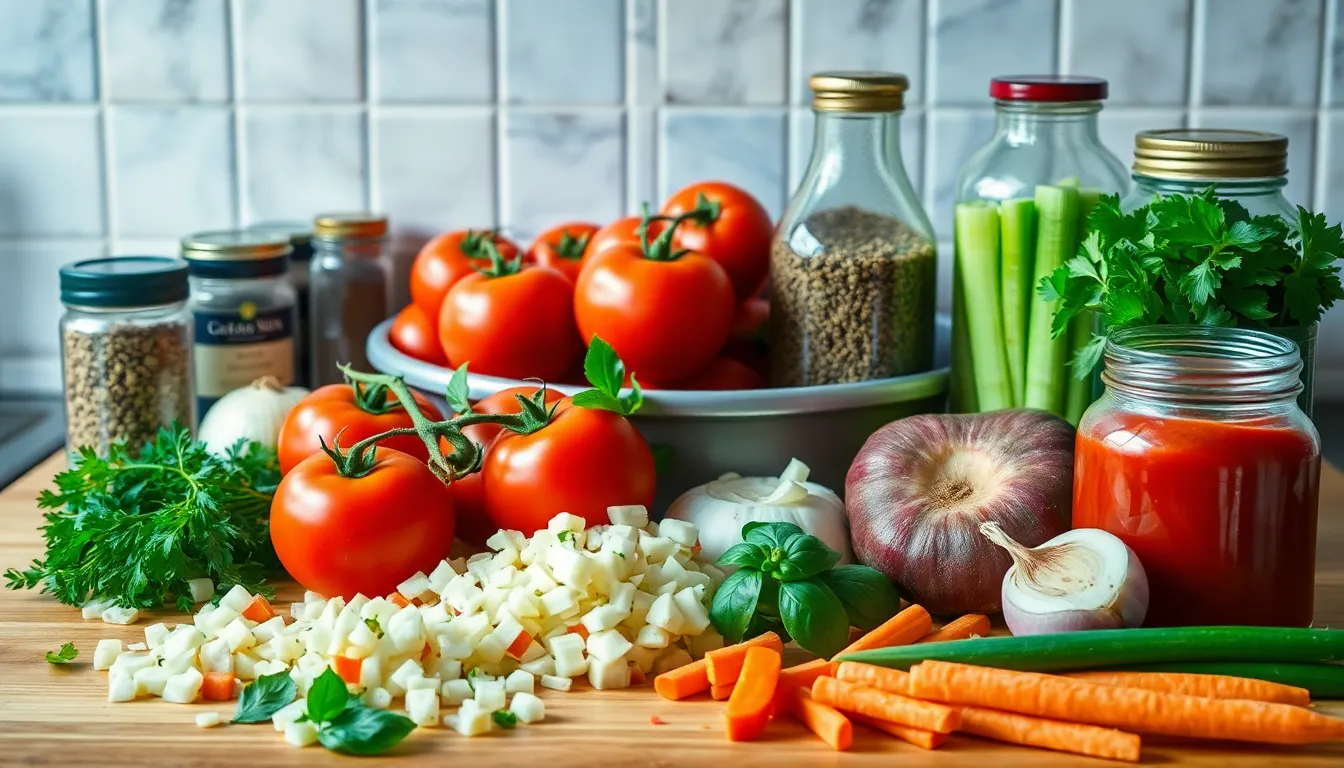
This section details the essential ingredients for crafting a homemade spaghetti sauce that excels in flavor and freshness.
Fresh Tomatoes
Fresh tomatoes are the backbone of an exceptional spaghetti sauce. Choose ripe tomatoes, such as San Marzano or Roma varieties, for their rich flavor and low moisture content. About two pounds of fresh tomatoes yield a robust sauce. To enhance sweetness, allow the tomatoes to ripen on the vine before harvesting.
Aromatic Vegetables
Aromatic vegetables add depth and complexity to the sauce. Use one medium onion and three cloves of garlic, finely chopped, to provide a fragrant base. Adding one medium carrot and one stalk of celery, both diced, contributes natural sweetness and texture. Sauté these vegetables in two tablespoons of olive oil until softened for optimal results.
Herbs and Spices
Herbs and spices elevate the sauce’s taste profile. Incorporate a teaspoon of dried oregano and a teaspoon of dried basil for classic Italian flavors. Additionally, consider a pinch of red pepper flakes for a touch of heat. Fresh herbs, such as parsley or basil, can be added at the end of cooking for a burst of freshness.
Preparation Steps
Creating a rich and flavorful spaghetti sauce involves a few essential steps. By following the proper techniques, anyone can achieve a sauce that rivals restaurant quality.
Cooking the Base
Begin by heating three tablespoons of olive oil in a large saucepan over medium heat. Once the oil shimmers, add one chopped medium onion, allowing it to sauté for about five minutes until translucent. Next, incorporate three minced garlic cloves, one finely chopped medium carrot, and one finely chopped celery stalk. Sauté these aromatic vegetables for another five minutes until they soften and develop a fragrant base. This combination forms the foundation of flavor for the sauce.
Simmering for Flavor
After cooking the base, add two cans (28 ounces each) of whole tomatoes, including their juice, to the saucepan. Use a wooden spoon to break up the tomatoes slightly. Season the mixture with one teaspoon of dried oregano, one teaspoon of dried basil, and a pinch of red pepper flakes. Stir the sauce well and bring it to a gentle simmer. Reduce the heat to low, allowing the sauce to simmer uncovered for about 30 minutes. This simmering process intensifies flavor and melds the ingredients beautifully. Taste the sauce occasionally and adjust seasoning, adding salt and pepper as preferred.
Variations to Try
Various spaghetti sauce variations allow exploration of flavors and ingredients while enhancing the dish. Consider these two popular options: meat-based sauces and vegetarian choices.
Meat-Based Sauces
Meat-based sauces add richness and protein to spaghetti dishes. Ground beef, sausage, or turkey can be used. For a classic Bolognese, brown one pound of ground meat in olive oil, then add diced onions, garlic, and aromatic vegetables for flavor. Incorporate canned tomatoes, herbs, and a splash of red wine for depth. Simmer for one hour to develop a robust taste. Another option includes adding pancetta or bacon for smokiness.
Vegetarian Options
Vegetarian sauces provide a lighter yet flavorful alternative. Consider a mushroom marinara, using about 12 ounces of chopped mushrooms sautéed with onion and garlic until caramelized. Incorporate canned tomatoes and herbs, simmer for 30 minutes for the flavors to meld. A roasted red pepper sauce offers a unique twist; blend roasted red peppers, garlic, and cream for a creamy texture. This variation suits vegans by omitting cream and substituting it with vegetable broth or plant-based cream.
Tips for Success
Crafting the perfect spaghetti sauce requires attention to detail and some key techniques. Following these tips can elevate homemade sauce to new heights.
Choosing the Right Tomatoes
Selecting high-quality tomatoes is crucial for optimal flavor. Ripe varieties like San Marzano or Roma tomatoes provide natural sweetness and acidity. Aim for about two pounds of whole canned tomatoes, preferably those packed in juice or puree. These tomatoes enhance the sauce’s depth and richness. If using fresh tomatoes, pick ripe ones and blanch them to remove the skins for a smoother texture.
Balancing Flavors
Achieving a well-rounded flavor profile in spaghetti sauce involves careful seasoning. Start with sautéed aromatic vegetables—onion, garlic, carrot, and celery—to create a flavorful base. After adding tomatoes, incorporate dried herbs like oregano and basil. Adjust seasoning gradually, tasting as you go to find the right balance. It’s important to consider acidity; if the sauce tastes too sharp, add a pinch of sugar or a splash of balsamic vinegar to mellow it out. For a spicy kick, include red pepper flakes, adjusting the quantity for the desired heat level.
Creating a homemade spaghetti sauce from scratch is an enriching experience that brings out the best in every pasta dish. With fresh ingredients and a bit of patience anyone can achieve a sauce that rivals their favorite Italian restaurant.
By following the detailed recipe and tips provided it’s easy to craft a sauce bursting with flavor and freshness. The variations allow for creativity in the kitchen catering to different tastes and dietary needs.
Whether it’s a classic meat sauce or a vibrant vegetarian option the joy of making spaghetti sauce from scratch is truly unmatched. So grab those fresh tomatoes and aromatic vegetables and start your culinary adventure today.