
In a world where everyday tasks can feel like an Olympic sport, functional training emerges as the superhero of fitness. It’s not just about lifting heavy weights or running marathons; it’s about preparing the body for real-life activities. Whether it’s lifting groceries or chasing after a runaway toddler, functional training equips individuals with the strength and agility to tackle life’s little challenges—without pulling a muscle or breaking a sweat… well, too much sweat.
What Is Functional Training?
Functional training targets movements and exercises that are relevant to daily life. This training emphasizes strength, balance, endurance, and flexibility in a way that mimics real-world tasks. Engaging in functional workouts helps individuals enhance their overall fitness and prepares them for routine activities.
Exercises in functional training incorporate multi-joint movements. For example, a squat involves the hips, knees, and ankles, simulating actions like sitting in a chair or picking up an object from the ground. Incorporating these movements improves functionality and builds strength that benefits everyday life.
Movement-based exercises such as lunges and push-ups develop core muscles and stability. Strong core muscles support better posture and reduce the risk of injuries during daily tasks. Training includes using resistance bands, free weights, bodyweight exercises, and even stability balls.
Additionally, functional training adapts to various fitness levels. Beginners can start with basic movements while more advanced individuals can integrate complex exercises. Progressing in intensity or complexity ensures continual improvement while avoiding plateaus.
Trainers often focus on developing specific skills like agility, coordination, and balance during sessions. These skills enhance performance in activities such as walking, running, or playing sports. Benefits also extend to injury prevention, as functional training strengthens stabilizing muscles and improves body awareness.
Lastly, the holistic approach of functional training fosters a healthier lifestyle. Individuals experience increased energy levels, better movement efficiency, and improved mental health. Consequently, adopting functional training can lead to significant enhancements in quality of life.
Benefits of Functional Training
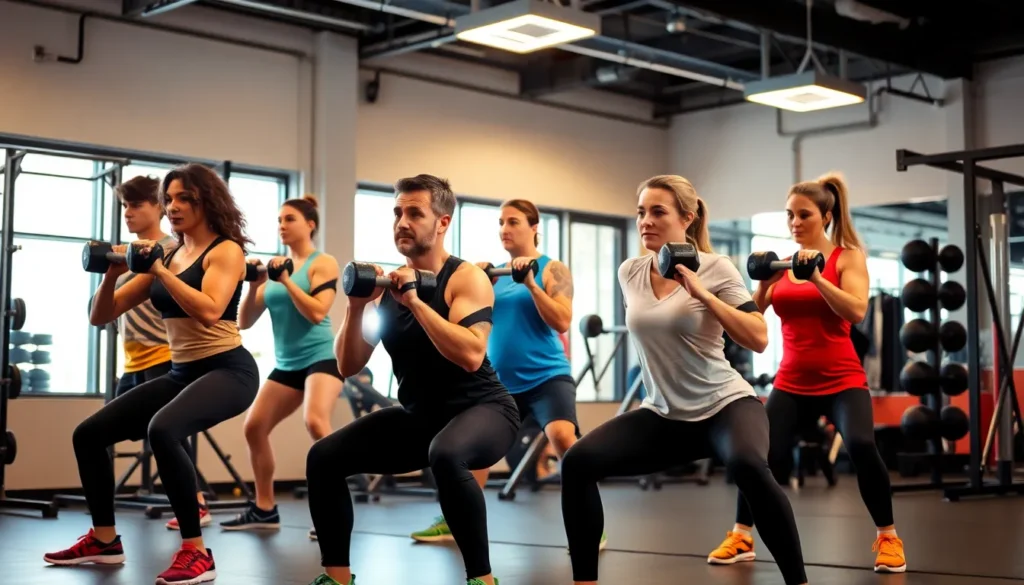
Functional training provides various advantages that significantly enhance overall fitness and daily movement skills.
Improved Strength and Stability
Strength and stability improve through functional training. Exercises like squats and lunges not only strengthen muscles but also enhance body stability during everyday tasks. They engage multiple muscle groups, providing a comprehensive workout that builds overall strength. Stability gained from these workouts translates directly into better performance during daily activities, reducing the likelihood of injuries. Incorporating free weights or resistance bands further challenges the muscles, promoting greater strength gains. Individuals notice improved performance in activities such as climbing stairs or lifting groceries, impacting their everyday life positively.
Enhanced Mobility and Flexibility
Mobility and flexibility benefits arise from consistent functional training. Stretching and dynamic movements increase range of motion in joints, allowing for smoother movement during daily tasks. Activities like rotating the torso or reaching overhead become easier with enhanced flexibility, making routine activities less challenging. Individuals experience fewer restrictions, leading to greater freedom of movement. Improved mobility supports athletic performance and reduces the risk of injury during physical activities. Overall, enhanced flexibility contributes to better posture and balance, essential factors for maintaining an active lifestyle.
Key Principles of Functional Training
Functional training revolves around exercises mimicking real-life movements, enhancing everyday performance. This training method focuses on improving overall physical capabilities like strength, balance, and flexibility.
Movement Patterns
Movement patterns form the foundation of functional training. Exercises such as squats and lunges replicate activities like sitting and standing, promoting effective motion in daily life. Engaging in multi-joint movements builds coordination and enhances strength across several muscle groups. Exercises reflect the way the body naturally moves, ensuring that improvements translate directly to real-world tasks. This practical approach leads to greater efficiency during activities such as running, climbing stairs, or lifting objects. Prioritizing movement patterns fosters the development of functional strength, allowing individuals to better navigate their environment.
Core Engagement
Core engagement plays a crucial role in functional training. A strong core supports nearly every movement, stabilizing the body during physical activities. Exercises like planks and rotational movements strengthen core muscles, promoting better posture and balance. Maintaining core stability influences performance in daily tasks, from carrying groceries to participating in sports. Enhancing core engagement also reduces the risk of injuries, providing a solid foundation for all types of movement. Focusing on core strength improves overall functional fitness, translating to increased confidence and capability in everyday activities.
Types of Functional Training Exercises
Functional training includes various exercises designed to improve everyday movement efficiency. Two primary categories exist: bodyweight exercises and equipment-based exercises.
Bodyweight Exercises
Bodyweight exercises rely solely on an individual’s weight for resistance. Squats, lunges, and push-ups engage multiple muscle groups while simulating real-life actions. These exercises enhance core strength, flexibility, and stability. Wall sits, for example, strengthen leg muscles while improving endurance. Variations like planks challenge the core and improve posture. Incorporating movements that mimic daily tasks, bodyweight exercises adapt easily to different fitness levels and can be performed anywhere, making them accessible and effective for everyone.
Equipment-Based Exercises
Equipment-based exercises utilize tools to add resistance and variety to functional training. Using resistance bands, kettlebells, or medicine balls increases the challenge and effectiveness. Deadlifts with kettlebells condition the posterior chain while mimicking the act of picking up heavy objects. Bosu balls enhance balance and strength through stability training. Tools like stability balls allow for dynamic exercises that focus on core engagement. With various options available, these exercises cater to different fitness goals and preferences, making them a valuable addition to any functional training regimen.
Integrating Functional Training Into Your Routine
Integrating functional training into daily routines enhances overall fitness and prepares individuals for everyday tasks.
Designing a Functional Training Program
Creating a functional training program involves selecting exercises that replicate daily movements. Focus on including multi-joint movements like squats and lunges to build strength and endurance. Emphasizing core stability is crucial, as a strong core supports various activities. Establish a balanced routine by incorporating bodyweight and equipment-based exercises, ensuring variety and adaptability. For effective workouts, aim for 2 to 3 sessions per week, gradually increasing intensity and complexity over time. Tracking progress helps maintain motivation and adjust the program as needed, ensuring continuous improvement in functional fitness.
Tips for Beginners
Beginners should start slowly when incorporating functional training into their routines. Focusing on mastering basic movements, like squats and push-ups, lays a solid foundation. Prioritize proper form to prevent injuries and maximize benefits. It’s beneficial to choose exercises that target different muscle groups while maintaining a balanced approach. Gradually introduce resistance, whether through bodyweight or equipment, as strength builds. Consistency plays a key role in developing skills, so aim for at least 2 sessions weekly. Seeking guidance from a certified trainer can further enhance understanding and effectiveness in functional training.
Functional training offers a comprehensive approach to fitness that prioritizes real-world applications. By focusing on movements that mimic daily activities it enhances strength agility and overall performance. This method not only improves physical capabilities but also contributes to better posture and reduced injury risks.
Incorporating functional exercises into a routine allows individuals to adapt their workouts to suit their fitness levels. Whether through bodyweight movements or the use of equipment the versatility of functional training makes it accessible for everyone.
Ultimately embracing functional training can lead to a healthier lifestyle increased energy and improved mental well-being. By prioritizing functionality individuals can experience a significant boost in their quality of life.