Child development is a fascinating journey that every little human undertakes, and it’s more thrilling than watching a toddler try to outrun a puppy. From their first wobbly steps to the moment they confidently declare they’re the boss of the playground, these milestones shape who they’ll become. Understanding this process is crucial for parents, educators, and anyone who’s ever had to decipher a toddler’s attempt at storytelling.
As children grow, they navigate a world filled with challenges and discoveries that can leave even the most seasoned adult scratching their heads. With each giggle and tantrum, they’re not just learning how to color within the lines; they’re developing skills that will last a lifetime. Dive into the world of child development and discover how to support these tiny adventurers on their epic quest for knowledge and independence.
Understanding Child Development
Child development involves a series of milestones that children reach as they grow. This process is essential for parents and educators, providing insights into various challenges and discoveries.
Stages of Child Development
Physical growth, emotional regulation, and cognitive skills occur in distinct stages. Infancy includes rapid physical and sensory development, while toddlers begin exploring independence and social interaction. Preschool-aged children enhance language and thinking abilities, often engaging in imaginative play. School-age children develop self-confidence and peer relationships. Adolescents focus on identity and decision-making skills. Each stage contributes to lifelong learning and adaptation.
Key Theories and Models
Different theories shape our understanding of child development. Piaget’s cognitive development theory emphasizes the child’s active role in learning through stages: sensorimotor, preoperational, concrete operational, and formal operational. Erikson’s psychosocial theory highlights eight stages that focus on social and emotional challenges throughout the lifespan. Vygotsky’s sociocultural theory underscores the significance of social interaction and cultural context in development. These models guide educators and parents in supporting children’s growth and nurturing their strengths.
Factors Affecting Child Development
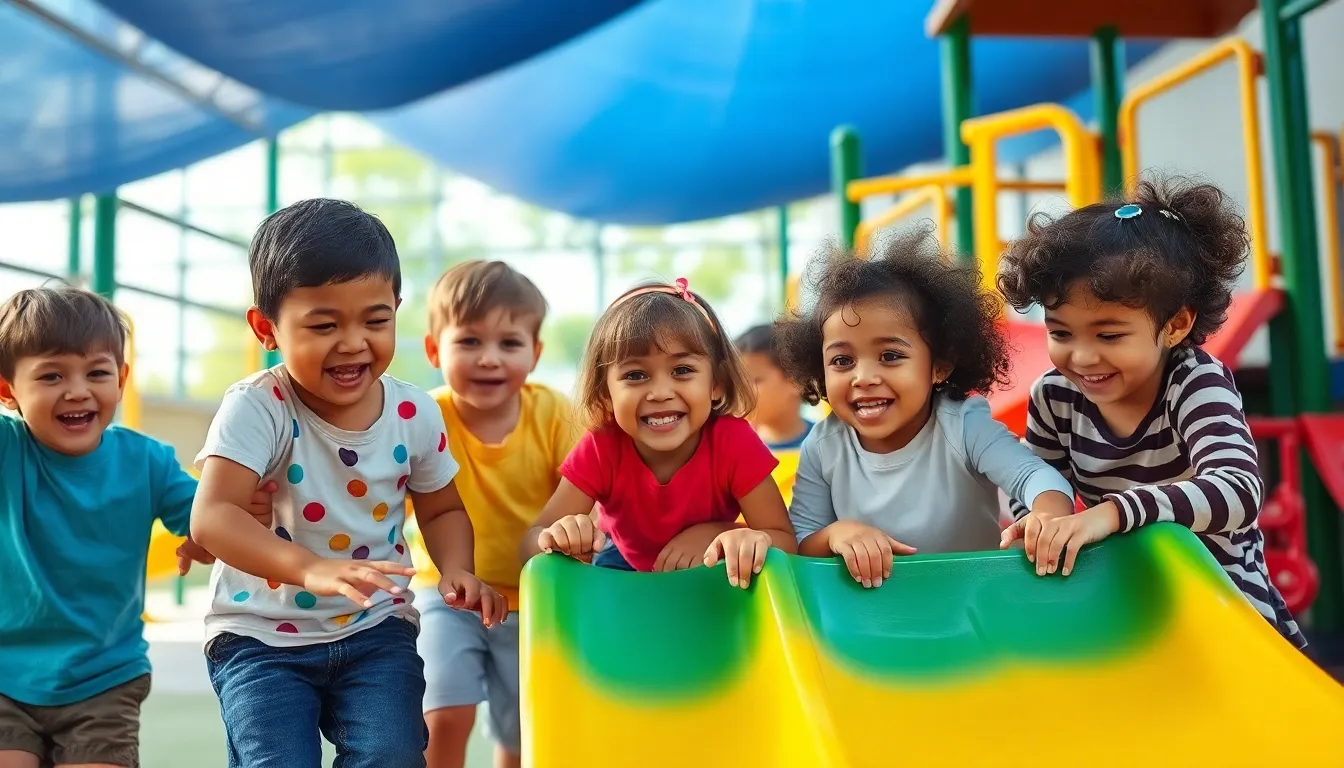
Child development involves various factors, with genetic and environmental influences playing pivotal roles. Understanding these elements is crucial for fostering healthy growth.
Genetic Influences
Genetics significantly impacts a child’s physical traits, temperament, and even learning abilities. Hereditary factors contribute to attributes such as height, skin color, and intelligence levels. Research indicates that certain cognitive skills, such as memory capacity, are also influenced by genetic make-up. Unique combinations of genes inherited from parents shape each child’s developmental trajectory. For instance, a child exhibiting strong mathematical skills may inherit these abilities from parents who also excel in mathematics. Genetic predispositions create a foundation, but environmental factors interplay to shape the complete development.
Environmental Influences
The environment surrounding a child affects their development in profound ways. Quality of education, socioeconomic status, and home stability play significant roles. Children exposed to nurturing and stimulating environments tend to achieve greater cognitive and emotional milestones. Access to resources, such as books and extracurricular activities, enhances learning experiences. Social interactions with peers and family contribute to emotional regulation and resilience. Safe, supportive environments foster confidence and exploration, ultimately impacting lifelong skills. A child raised in an enriched environment often displays advanced social skills compared to those in deprived settings. Environmental conditions interact with genetic predispositions, illustrating the complex nature of child development.
Milestones in Child Development
Milestones mark significant benchmarks in a child’s growth journey. Understanding these markers helps parents and educators support children effectively.
Cognitive Milestones
Cognitive development unfolds in stages, with children achieving key skills at different ages. By six months, they recognize familiar faces and respond to their names. At one year, they begin to understand simple instructions. A two-year-old can combine words into short phrases, showcasing language development. By age three, toddlers engage in pretend play and solve basic problems, indicating advanced thinking. These cognitive milestones offer insights into a child’s growing ability to learn, reason, and communicate.
Physical Milestones
Physical growth occurs rapidly during childhood. Infants typically roll over by four months and sit up by six months. Walking often begins around one year of age. As they reach two years old, children exhibit improved coordination by climbing and running. By age five, most children can skip, hop, and throw a ball. Tracking these milestones reinforces the importance of gross and fine motor skills, essential for everyday activities and overall health.
Emotional and Social Milestones
Emotional and social development plays a crucial role in child growth. Infants bond with caregivers by smiling and making eye contact. By age two, they start to display feelings like frustration and joy. At this stage, parallel play with peers becomes evident, although cooperative play may begin later. By age five, children express empathy and navigate friendships, showcasing enhanced interpersonal skills. Recognizing these milestones emphasizes the value of emotional intelligence and social interaction in early development.
Importance of Early Intervention
Early intervention plays a crucial role in enhancing a child’s development. Identifying delays promptly can significantly impact a child’s future growth and learning.
Identifying Developmental Delays
Recognizing signs of developmental delays is essential for timely support. Common indicators include delayed speech and language skills, difficulty in social interactions, and challenges with motor skills. Parents and educators must monitor these milestones closely. A child who struggles to engage with peers or follow basic instructions may benefit from an evaluation. Consistent observation and reporting can facilitate early interventions, which can lead to improved outcomes.
Strategies for Support
Implementing effective strategies can significantly aid children facing developmental challenges. Creating a structured routine offers a sense of stability that supports learning. Engaging children with interactive games boosts cognitive and language skills. Collaboration with specialists such as speech therapists or occupational therapists can provide targeted interventions. Parents should also involve themselves in their child’s educational activities, reinforcing learning at home. Regular communication with educators ensures a cohesive approach to supporting the child’s growth. By prioritizing these strategies, parents and caregivers can foster a nurturing environment for development.
Understanding child development is crucial for fostering a child’s growth and success. By recognizing the various stages and milestones children encounter, parents and educators can create supportive environments that nurture their abilities.
The interplay between genetics and environment plays a significant role in shaping a child’s trajectory. Early intervention and awareness of developmental challenges can make a lasting difference in a child’s life.
Ultimately, prioritizing engagement and support throughout this journey empowers children to thrive, adapt, and embrace their unique paths toward independence and lifelong learning.