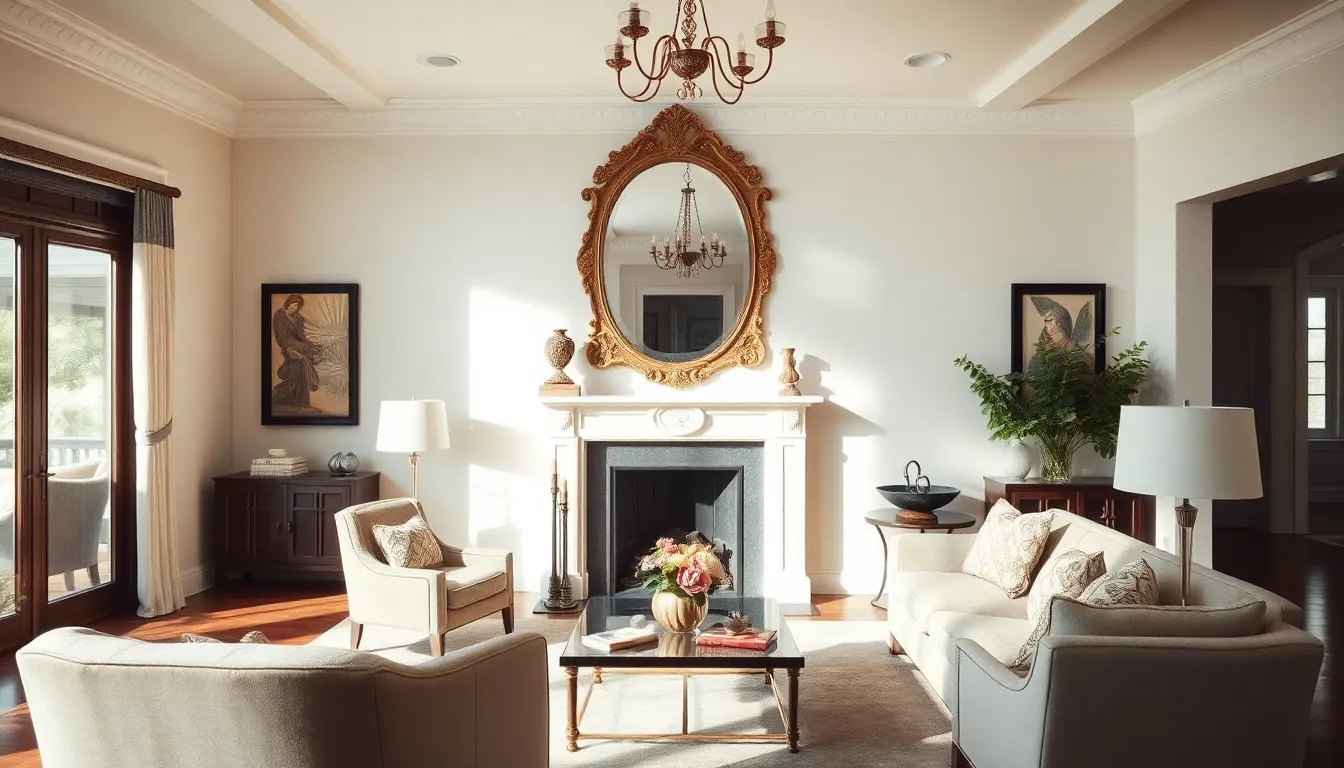
Mirrors aren’t just for checking your hair before a big date; they’re powerful tools that can transform a space. The right mirror placement can make a room feel bigger, brighter, and even more inviting. It’s like giving your home a magic wand—poof! Instant elegance.
But wait, there’s more! Understanding mirror placement concepts can turn even the drabbest of rooms into a stylish sanctuary. Whether it’s reflecting natural light or creating an illusion of depth, strategic positioning can work wonders. So grab your tape measure and let’s dive into the world of mirrors, where the only thing standing between you and a fabulous space is a little creativity and a dash of humor. After all, who knew home decor could be this fun?
Overview Of Mirror Placement Concepts
Strategic mirror placement transforms a space by enhancing its visual appeal. Increased light reflects off mirrors, creating bright environments. Common placement areas include living rooms, hallways, and entryways.
In living rooms, positioning mirrors opposite windows amplifies natural light. Mirrors act as focal points, drawing attention to artwork or furniture. Choosing large mirrors can create an illusion of added space, making rooms feel more expansive.
Hallways benefit from mirrors by breaking monotony and adding depth. Narrow spaces appear wider with mirrors that stretch across walls. Optimizing wall height with tall mirrors enhances verticality, contributing to an airy feel.
Entryways host mirrors that invite guests and provide convenience. Shimmering surfaces reflect initial impressions, setting a welcoming tone. Placing mirrors near lighting fixtures further enhances brightness, ensuring an uplifting atmosphere.
Different styles of mirrors contribute unique characteristics. Decorative frames complement existing decor, while frameless designs yield a modern edge. Round mirrors soften geometrical lines, while rectangular options provide sleek symmetry.
Mirrors should align with existing furniture for a cohesive look. Placing a mirror on the same axis as a sofa or console table creates harmony. Ensuring that the mirror’s height aligns with eye level maximizes its functionality.
Experimenting with angles can lead to exciting adjustments in layout. Angled mirrors create dynamic reflections and draw the eye upward. Positioning mirrors at varying heights adds visual interest and whimsy to the decor.
Incorporating these concepts into design decisions can lead to remarkable transformations. Thoughtful mirror placement elevates style while enhancing the illusion of space and light.
Benefits Of Strategic Mirror Placement
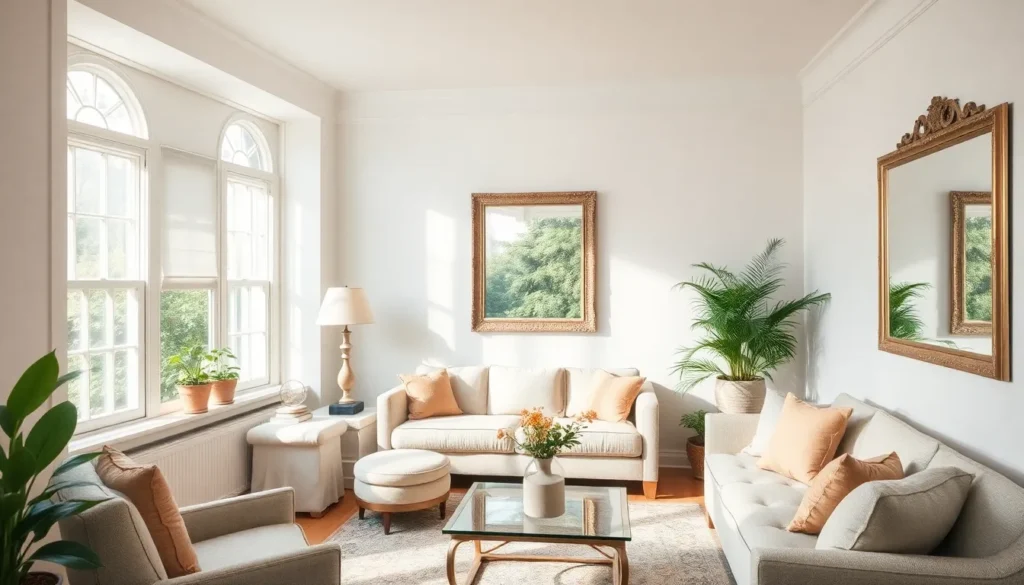
Strategic mirror placement offers numerous advantages for enhancing interior spaces.
Enhancing Space Perception
Mirrors create an illusion of depth, making rooms feel larger and more open. With one or more mirrors positioned thoughtfully, small rooms can transform into airy spaces. They reflect adjacent rooms, drawing the eye through the home. This technique works wonders in narrow areas like hallways or small living rooms. By reflecting light and colors, mirrors amplify the overall aesthetic impact, enhancing the perception of space. Placing mirrors across from doorways or windows encourages a seamless flow that contributes to a more expansive atmosphere.
Improving Lighting
Natural light can brighten any room, and mirrors excel at maximizing this effect. Mirrors reflect sunlight, illuminating darker corners and creating a warmer ambiance. They capture light from windows and redirect it throughout the space, making it feel more inviting. In dimly lit areas, strategically placed mirrors act as light boosters, reducing reliance on artificial lighting. By enhancing brightness, mirrors create a vibrant and cheerful environment that uplifts the mood. This benefit is particularly useful in areas with limited windows, enabling individuals to enjoy a more cheerful atmosphere.
Common Mirror Placement Techniques
Mirror placement techniques significantly enhance a room’s aesthetic and functionality. Understanding where and how to position mirrors leads to stylish, practical designs.
Focal Points In A Room
Mirrors create striking focal points in living spaces. Placing a large mirror above a fireplace or a sofa draws attention and anchors the room’s design. Smaller mirrors can be grouped creatively on walls, forming an eye-catching gallery that complements the decor. Positioning mirrors opposite windows allows them to reflect natural light, adding brightness to the space. These reflective accents direct attention and guide the viewer’s eye, enhancing overall visual appeal.
Creating Depth And Dimension
Mirrors provide an effective way to create depth in rooms, especially in narrow hallways or small areas. Installing a mirror at eye level on a long wall visually extends the space, making it appear wider. Utilizing framed mirrors in various sizes adds dimension and visual interest to walls. They can also enhance the sense of height in compact spaces, contributing to a more open feel. Placing mirrors strategically in corners reflects different angles, amplifying light and creating an illusion of expanded dimensions.
Considerations For Different Spaces
Strategic mirror placement enhances the aesthetics and functionality of various spaces. Each area of the home has unique considerations that influence how mirrors should be placed.
Living Room
In living rooms, positioning mirrors opposite windows increases natural light and brightness. A large mirror above a fireplace creates a striking focal point, drawing attention to the room’s centerpiece. Smaller mirrors can be grouped for a gallery effect, adding visual intrigue across the wall. Optimizing angles adds depth, making the space feel larger. Decor around mirrors, like artwork or furniture, should reflect the overall decor style for a cohesive look.
Bedroom
Mirrors in bedrooms serve both practical and aesthetic purposes. A full-length mirror aids in outfit selection while enhancing the sense of space. Placing mirrors near windows allows them to reflect natural light, creating a serene atmosphere. Consider hanging mirrors above dressers to elevate the room’s elegance and functionality. Integrating decorative frames complements the existing decor and adds a personal touch.
Bathroom
Mirrors in bathrooms focus on functionality and light enhancement. A large mirror above the sink offers practicality while visually expanding the space. Utilizing framed mirrors can add style, ensuring they match fixtures and cabinets. Strategically placing smaller mirrors on side walls promotes a bright and inviting environment. Furthermore, incorporating backlit mirrors enhances visibility while creating a modern touch.
Embracing the art of mirror placement can truly elevate home decor. By thoughtfully positioning mirrors, individuals can transform their living spaces into bright and inviting environments. The interplay of light and reflection not only enhances aesthetics but also creates an illusion of spaciousness.
Whether it’s a large statement piece in the living room or a series of smaller mirrors in a hallway, each choice contributes to the overall ambiance. With creativity and a keen eye for design, anyone can harness the power of mirrors to craft a home that feels open and stylish. Ultimately, it’s about making spaces feel more connected and enjoyable, reflecting personal style while enhancing functionality.